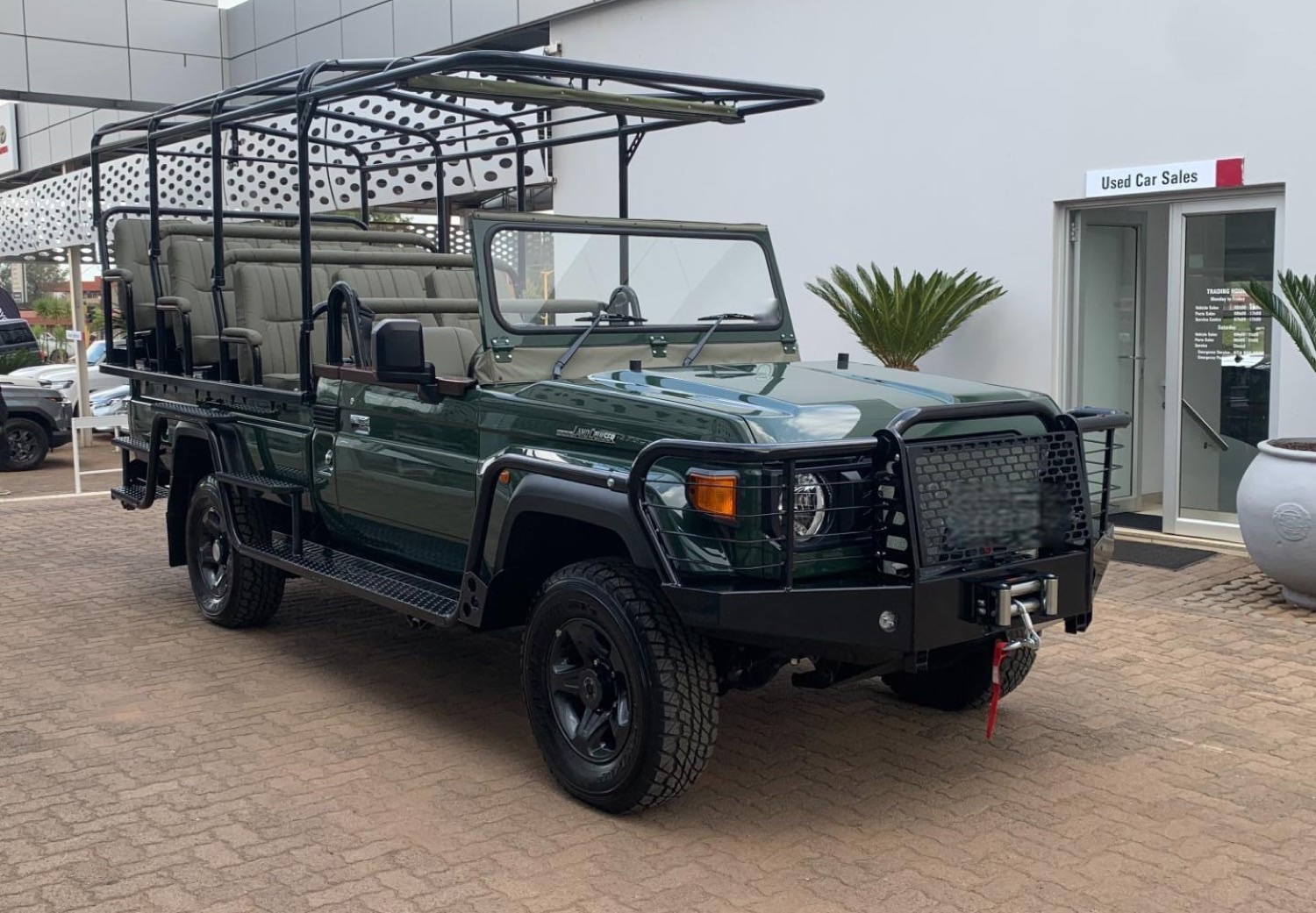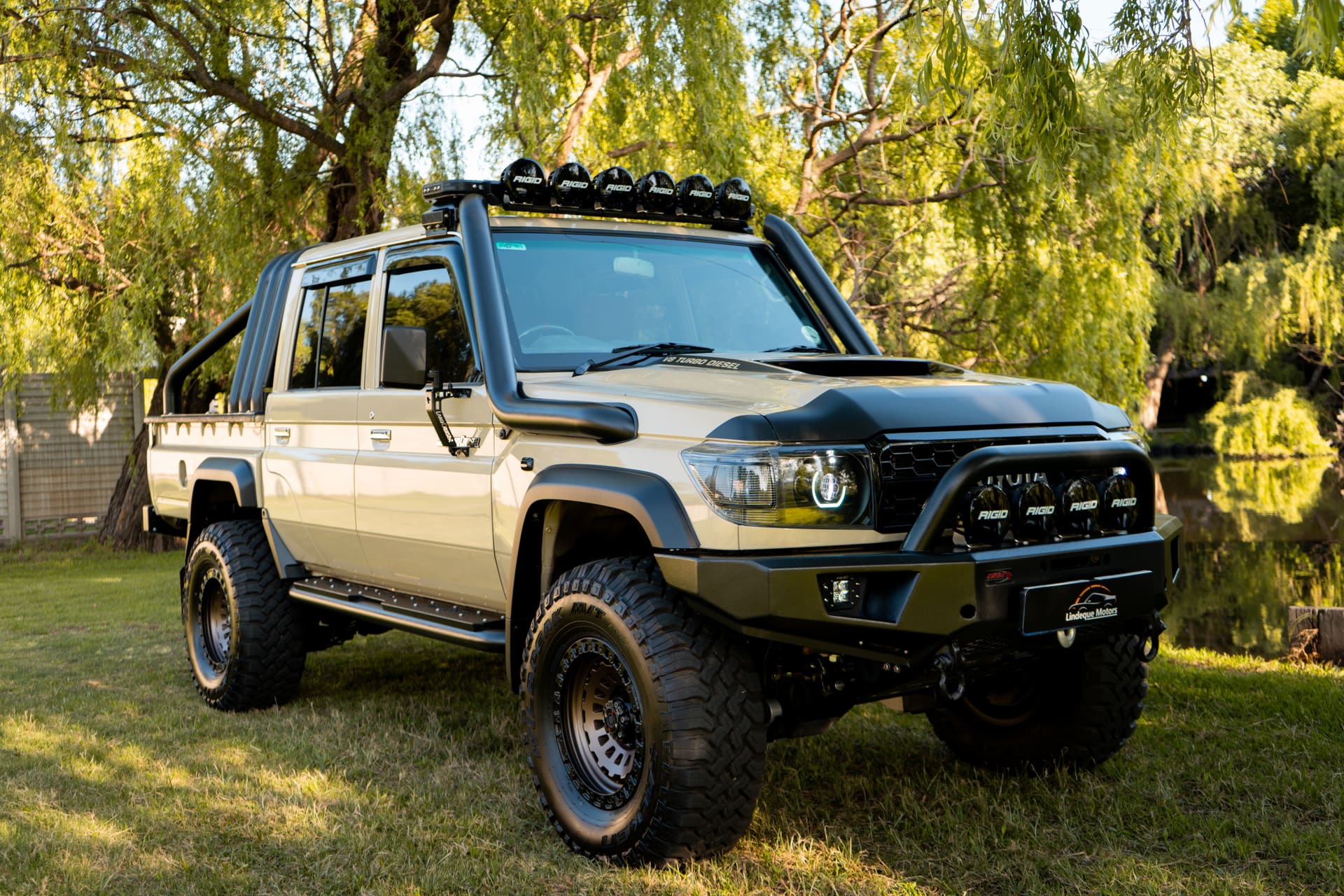
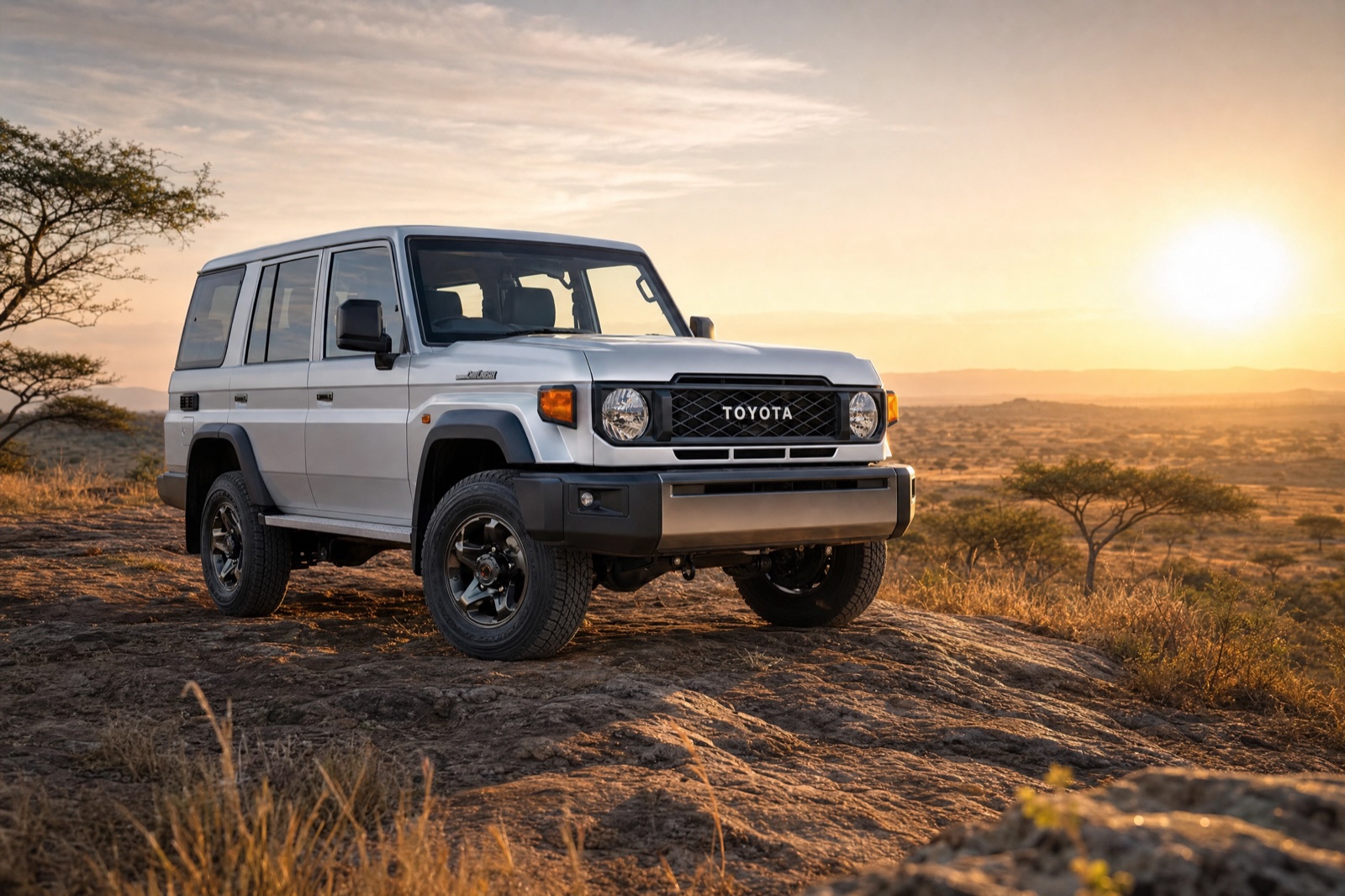
If you’re choosing between a Land Cruiser 79 Series and a 76 Series in South Africa, the honest answer is that you’re not really choosing between two different vehicles — you’re choosing a body style. Both ride on the same 70-series platform and, in modern SA-spec, both run the same 4.5-litre V8 turbo diesel (the 1VD-FTV). The 79 is the bakkie (pickup, single or double cab) with an open load bed; the 76 is the enclosed 5-door station wagon. Right now, across the listing platforms we track, the 79 Series has a median asking price of about R989,900 with 738 active listings, while the rarer 76 Series sits at roughly R1,098,400 with 179 active listings. (Those are asking prices, aggregated daily across the major SA listing platforms — not final transaction prices.) So the real decision is simple: do you need a load bed or an enclosed cabin?
The numbers, side by side
These are live medians from our live market data, aggregated across the major SA listing platforms and refreshed daily. Treat them as the starting line for a negotiation, not the finish line.
| 79 Series | 76 Series | |
|---|---|---|
| Body | Bakkie (single & double cab) | Station wagon (5-door) |
| Median asking price | R989,900 | R1,098,400 |
| Active listings (SA) | 738 | 179 |
| Platform | 70-series | 70-series |
A few things stand out. First, the price gap is real but modest — about R108,500 on the medians. Second, and more telling, is the listing count: there are over four times as many 79 Series for sale as 76 Series. That scarcity is a big part of why the 76 carries the higher asking price. It isn’t a “better” or more expensive vehicle on paper — there are simply fewer of them changing hands, and rarity holds value.
What the shared platform means for you
Because the 79 and 76 share the same chassis, engine, drivetrain and the bulk of their running gear, the things that usually separate vehicles at this price — reliability, parts availability, mechanical longevity, towing ability — are effectively a wash between them. The Land Cruiser 70-series reputation for going the distance applies equally to both. So you can take the mechanicals off your decision list almost entirely and focus on the one thing that genuinely differs: how the body suits your life.
That’s a rare and freeing position to be in as a buyer. You’re not weighing a more economical engine against a more capable one, or a cheaper model against a more durable one. You’re answering a single question about use case.
When the 79 Series (bakkie) is the right call
The 79 is the workhorse and the overland-build icon, and its load bed is the whole point. Choose it if:
- You haul heavy, bulky or dirty gear — feed, tools, recovery kit, building materials — and want it outside the cabin.
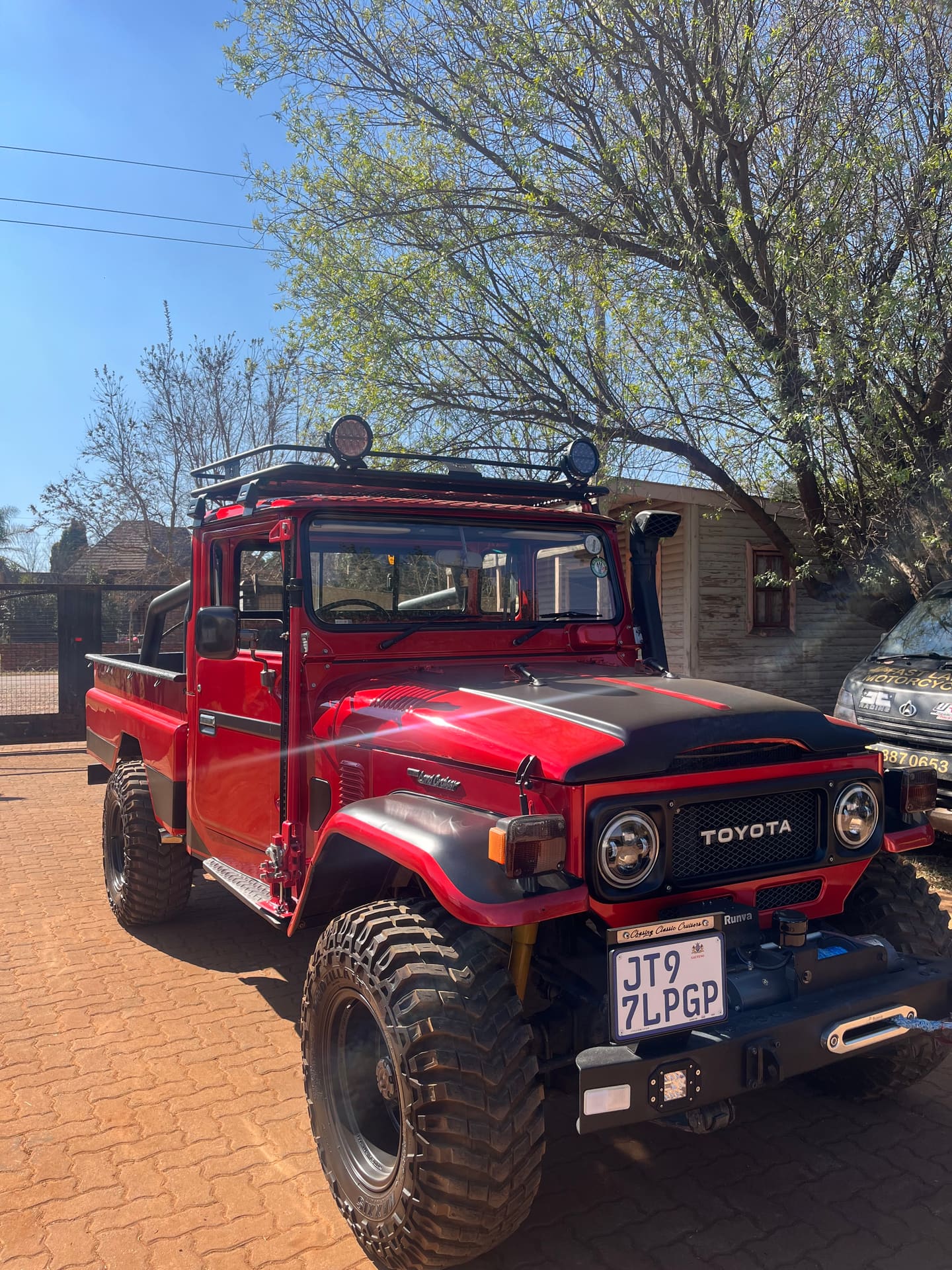
- You’re planning a custom build: a canopy, a drawer system, a ute tray, a serious long-range touring setup. The 79 is the platform most kit and conversions in SA are designed around.
- You run a farm, a fleet or a working operation where a bakkie body just earns its keep.
- You want the widest possible choice on the used market. With 738 active listings, you’ve got the leverage of selection — more vehicles to compare, more room to be patient and find the right one at the right price.
The double cab in particular has become a popular “do everything” choice: it carries people and a load, which is a big part of its appeal.
When the 76 Series (wagon) is the right call
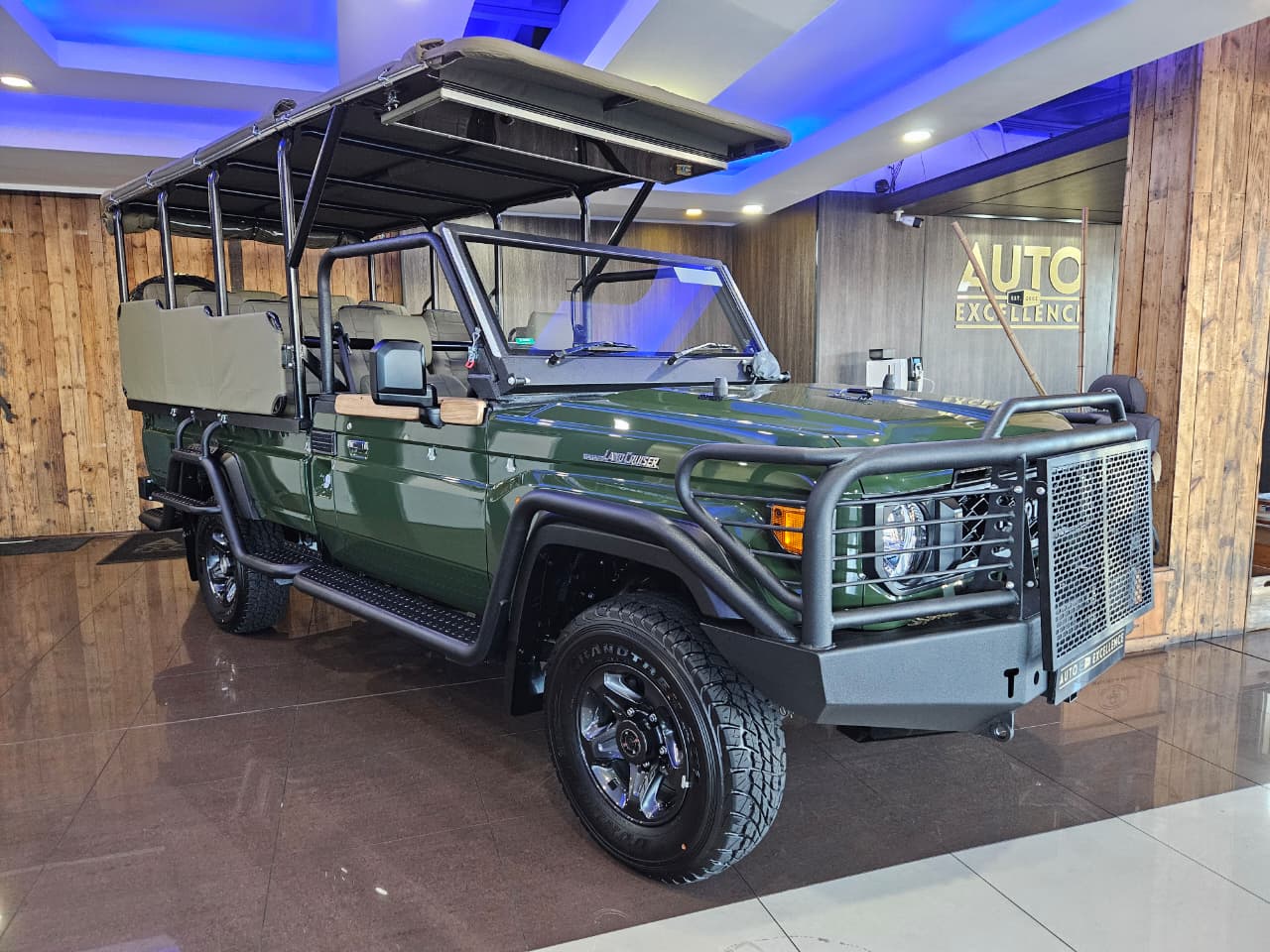
The 76 is the enclosed family and overland wagon. Choose it if:
- You carry passengers and kit together, dust-free and weatherproof, in one secure cabin.
- Security matters — your gear is locked inside the vehicle, not exposed on an open bed.
- You’re touring long distances with the family and want everyone (and everything) enclosed and comfortable.
- You value its relative rarity. Fewer on the road can mean it holds its appeal — and, as the asking-price data shows, the market already reflects that scarcity.
The trade-off is straightforward: you give up the open-bed flexibility of the bakkie, and you’ll have fewer vehicles to choose from when shopping, with only 179 active listings versus the 79’s 738.
How to use the asking-price data
It’s worth repeating, because it changes how you should read every number on this page: these are asking prices, not selling prices. They’re what sellers are hoping to get, aggregated across the major platforms and updated daily. They give you an accurate, current picture of where the market sits — but the price on any specific vehicle is a number to negotiate down from, depending on the seller’s situation, the kays, the condition and how long it’s been listed.
Use the medians as your anchor. If a 79 Series is listed well above R989,900, you’ll want to understand why — low kays, a desirable build, a sought-after spec — before you accept the premium. If a 76 Series is sitting below R1,098,400, work out whether that’s a genuine opportunity or a sign of something that needs checking.
The bottom line
There’s no wrong answer here, only the right body for how you travel and work. If you need to carry a load, build something custom, or want the broadest choice on the market, the 79 Series is your vehicle. If you need an enclosed, secure, family-friendly wagon and don’t mind paying a small premium for a rarer machine, go for the 76 Series. The mechanicals will look after you either way.
When you’re ready to shop, browse the live 76 Series listings and compare specific vehicles against the market medians above. On any listing page you can use the finance calculator to estimate your monthly repayments before you commit — so you’re walking into the deal knowing both the fair asking range and what it’ll actually cost you each month.