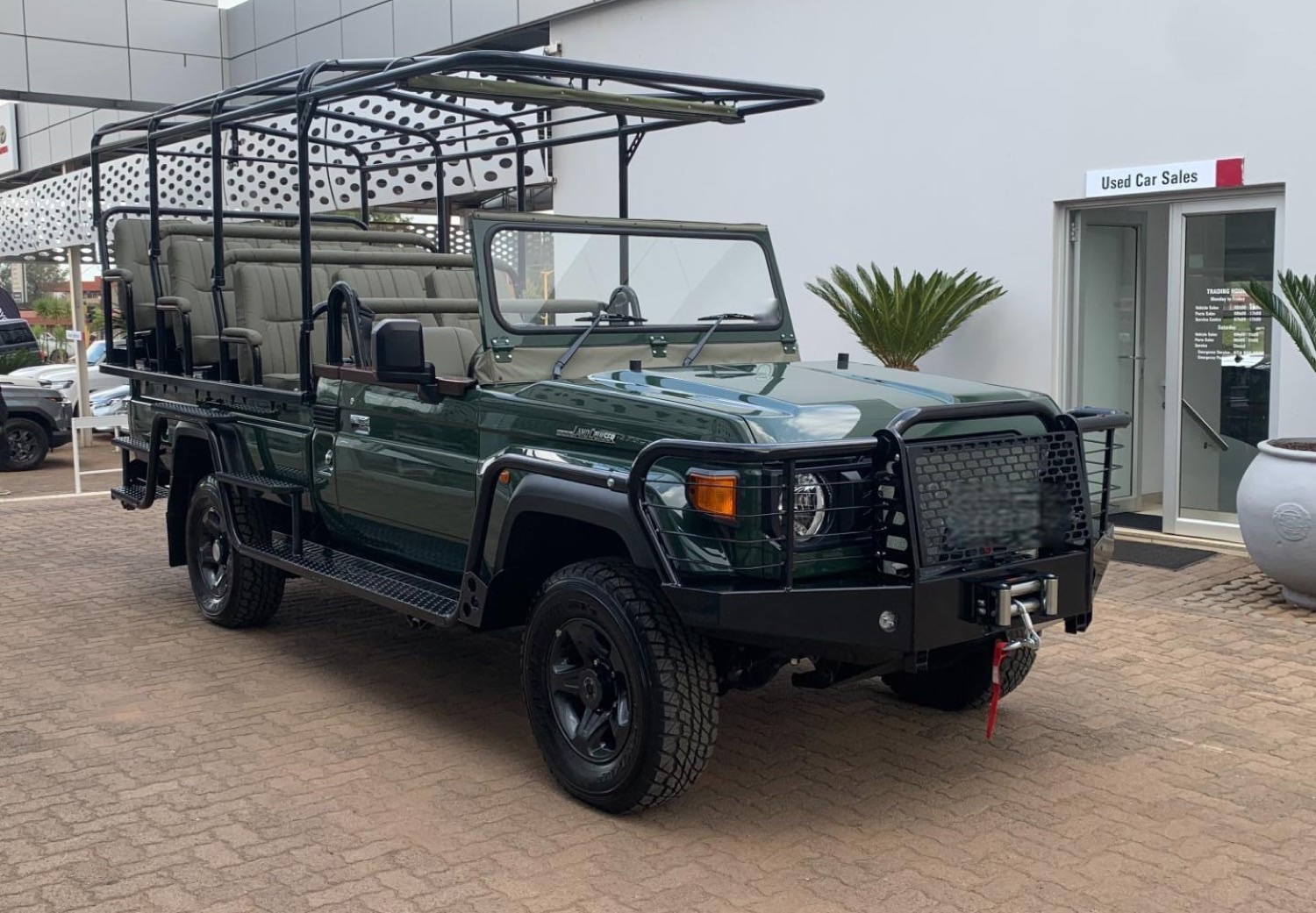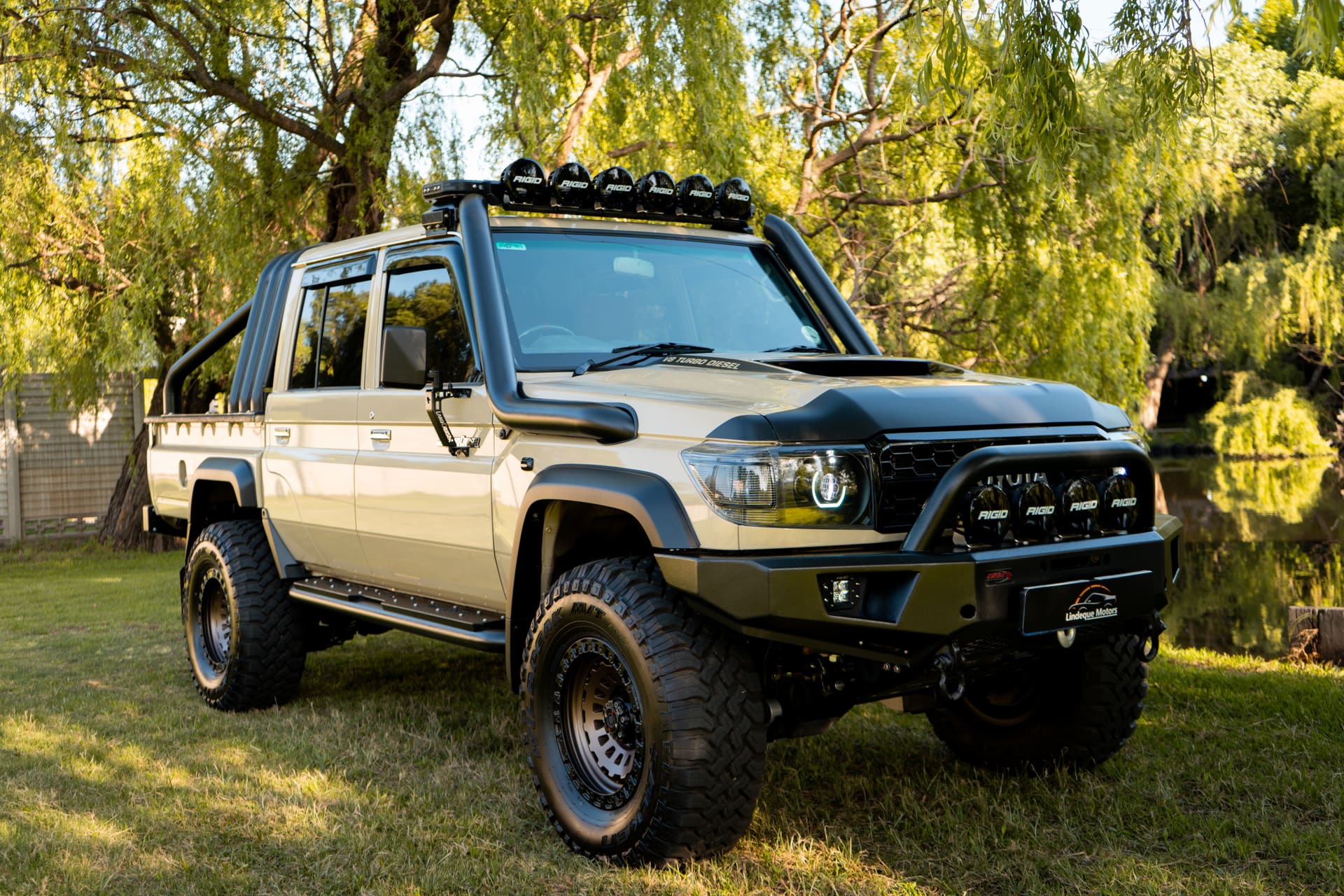
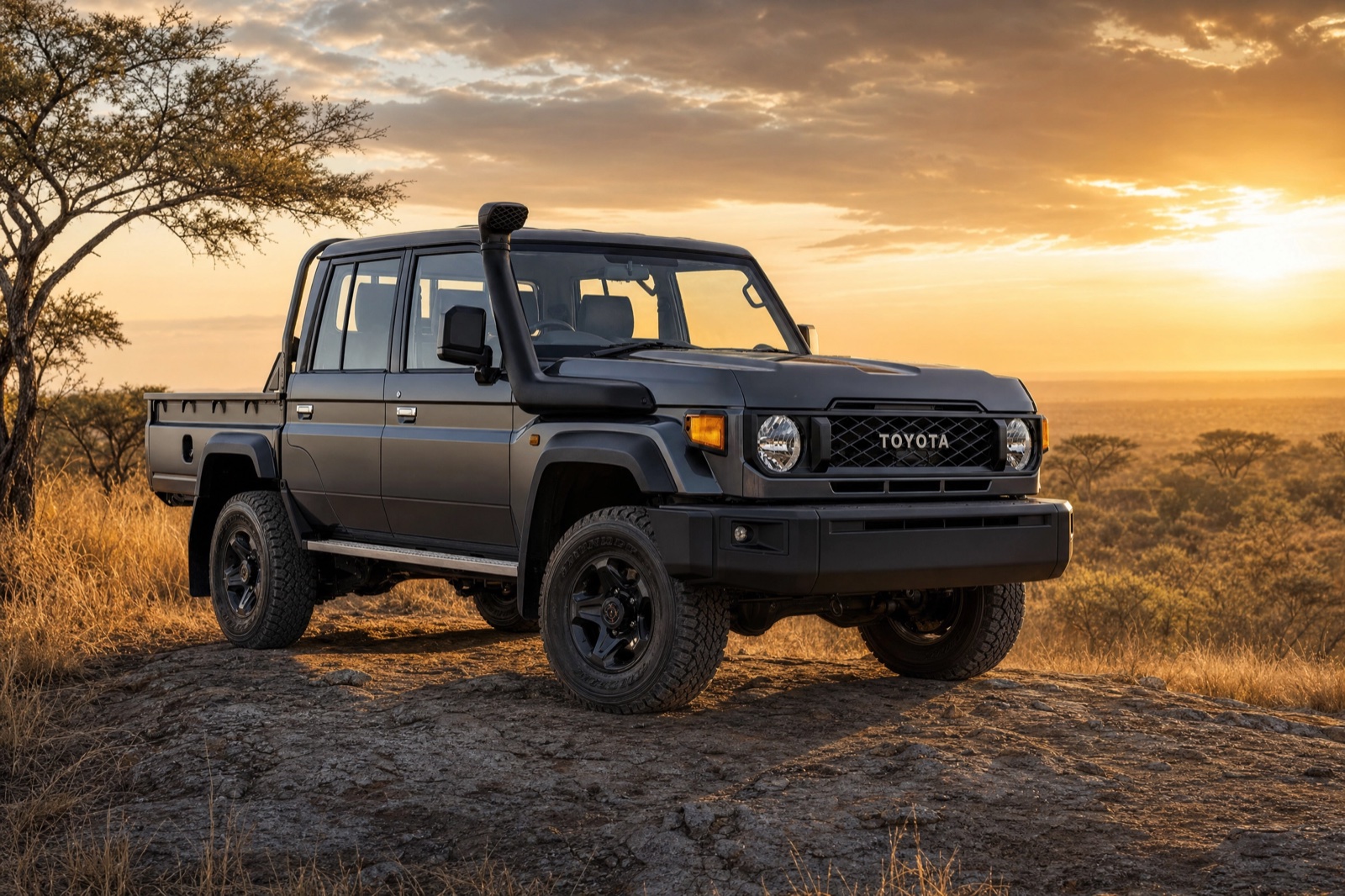
As of the latest live market data, a Toyota Land Cruiser 79 Series in South Africa has a median asking price of around R989,900, drawn from 738 active listings aggregated daily across AutoTrader, WeBuyCars, Cars.co.za and specialist Land Cruiser dealers. Real-world asking prices range from roughly R258,900 for older, higher-mileage examples up to about R2,800,000 for new V8 double cabs and heavily modified overland builds. Crucially, these are asking prices — where negotiation begins, not where the deal closes — so treat the median as your anchor and expect the final number to land below it on most cars.
That single figure hides a lot, though. The 79 Series is by far the largest Land Cruiser segment on the South African market, and the spread from R258,900 to R2,800,000 is enormous for one model. To know whether a given price is fair, you need to understand what sits at each end of that range.
Why the price range is so wide
The 79 Series has been sold in South Africa across model years spanning roughly 2002 to 2026, in two body styles and two very different engines. Stack those variables together and you get an unusually broad price band.
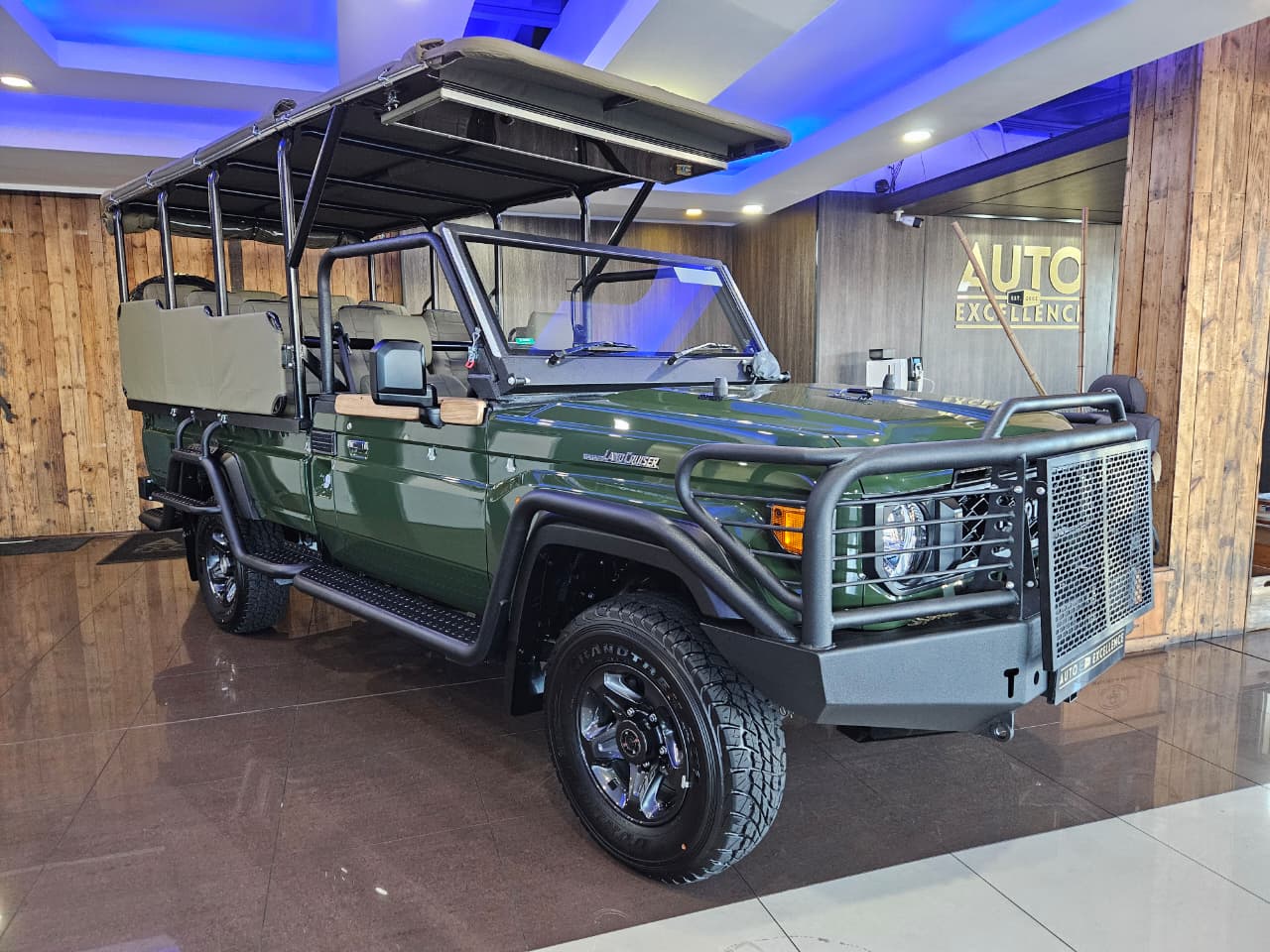
- Body style. The single cab is the long-load-bay workhorse — the bakkie that farms, mines and serious overlanders choose for maximum cargo length. The double cab seats up to five and swaps some load-bay length for a second row, which has made it the lifestyle and family-overland favourite.
- Engine. Older examples run the 4.2-litre 1HZ six-cylinder diesel — mechanically simple, famously durable, and the anchor at the bottom of the price range. The modern icon is the 4.5-litre 1VD-FTV V8 turbodiesel, which brings more power and refinement and sits squarely in the upper half of the asking spread.
- Age, mileage and condition. A 20-year-old 4.2 with high kays is a different proposition to a current-shape V8 with delivery mileage, and the price reflects it.
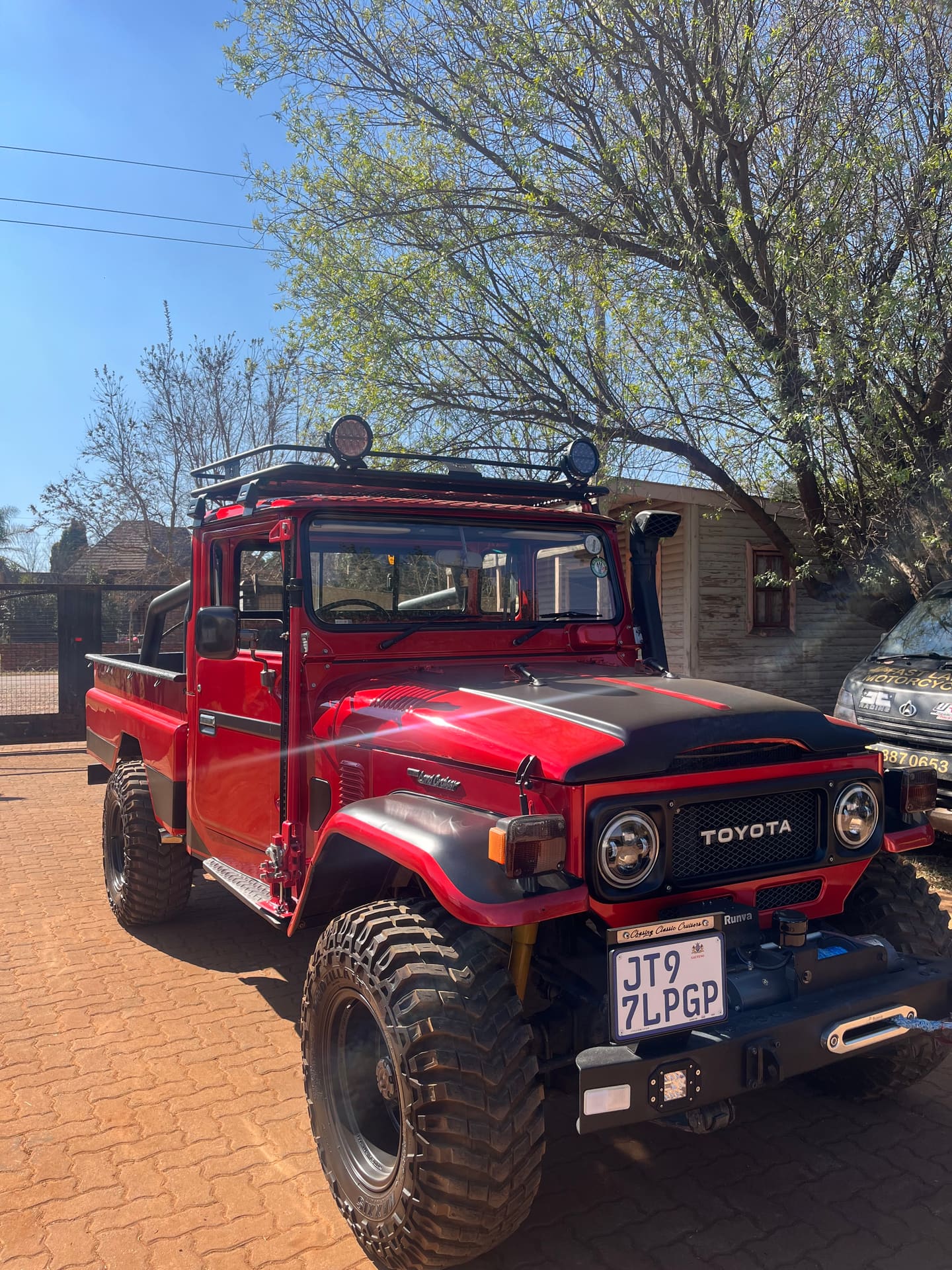
- Builds. Aftermarket overland kits — long-range tanks, dual batteries, suspension, canopies, winches — can add a great deal to a listing, which is part of why the top of the range stretches past R2.8 million.
What you get at each price point
Here is a rough map of where money lands on the 79 Series, using the live asking-price range as the boundaries.
| Asking-price band | What it typically buys |
|---|---|
| Around R258,900 to ~R500,000 | Older, higher-mileage examples, often 4.2 single cabs |
| ~R500,000 to ~R990,000 | Mid-range cars approaching the market median; mix of body styles and ages |
| ~R990,000 to ~R1.5m | Newer 4.5 V8 single and double cabs, lower mileage |
| ~R1.5m to R2,800,000 | New V8 double cabs and heavily modified overland builds |
Use these bands as orientation, not gospel. A well-kept older car with a strong service history can ask more than a tired newer one, and a comprehensive build can lift a listing well beyond what the bare vehicle would command.
How to read an asking price the right way
The number on the windscreen is the seller’s opening position. It reflects what they paid, what they still owe and how attached they are to the car — none of which is what it is worth to you. The way to cut through it is to compare the specific vehicle against the whole market rather than against a single rival listing.
That is exactly what our live market data page is for: it tracks the 79 Series median and full asking-price range, refreshed daily across every major SA platform and the specialists, so you can see instantly whether a car is priced under, on or over the market. When you are ready to shortlist, you can browse current 79 Series listings and, on any listing page, use the finance calculator to estimate monthly repayments before you commit.
Single cab vs double cab: which to buy
If your priority is load length — carrying long timber, pipe, hunting or expedition kit — the single cab is unbeatable and tends to be the better value within any given engine and year. If you need to carry people as well as gear, the double cab is the obvious pick, and it is the variant most buyers picture when they think of a modern 79. Because double cabs (especially newer V8s) are in such high demand, they generally sit higher in the asking-price range than equivalent single cabs.
Neither is objectively “better” — it is about your use case. What is consistent across both is the 79 Series’ reputation for strong resale, fed by relentless farm, mining, fleet and overland demand. That demand is the reason even older examples hold meaningful value, and the reason this is the single largest Land Cruiser segment we track.
What to check before you pay
Whatever your budget, the fundamentals matter more than the badge:
- Service history — a full, stamped record is worth real money on a Cruiser and protects resale.
- Mileage in context — high kays on a 4.5 V8 are not automatically a problem if the car has been serviced and used as intended; a suspiciously low reading on an older car deserves scrutiny.
- Build quality — on modified cars, find out who did the work and whether the kit suits how you will actually use the vehicle. A heavy build you do not need is money you will not recoup.
- The market position — before you negotiate, know where the asking price sits relative to the live median. That is your single strongest lever at the table.
The bottom line
A Toyota Land Cruiser 79 Series in South Africa carries a median asking price of about R989,900, with a live range from roughly R258,900 to R2,800,000 depending on body style, engine, age, condition and build. Remember that every one of those figures is an asking price aggregated across listing platforms and updated daily — not a final sale price. Anchor your expectations to the median, understand which end of the range your needs put you in, and check any specific car against the live market data before you make an offer.