The answer is a hardshell. If you’re seriously overlanding South Africa in a Land Cruiser — and by seriously we mean anything beyond a resort campsite with a braai area and a bar fridge — a hardshell rooftop tent is the right choice. (Call it a roof tent, a roof top tent or an RTT — same thing, and we’ll use the terms interchangeably.) We’ll cover the full market and every price tier, because not everyone is buying the Gen 3-R. But that’s where we’re starting: the answer, before the explanation.
Every seasoned SA overlander who’s done a full Kalahari run, the Botswana border road, or a week in Kruger’s remote camps has a softshell story. It usually goes like this: you roll in at 5pm, you’re tired, you’re dusty, you want a cold one — and you spend the first 15 minutes brushing fine red Kalahari sand off the cover before you can open the tent. Then you climb in and find it inside anyway. It’s a small thing. You manage. But after the third trip you start looking at your mate’s Alu-Cab with a different energy.
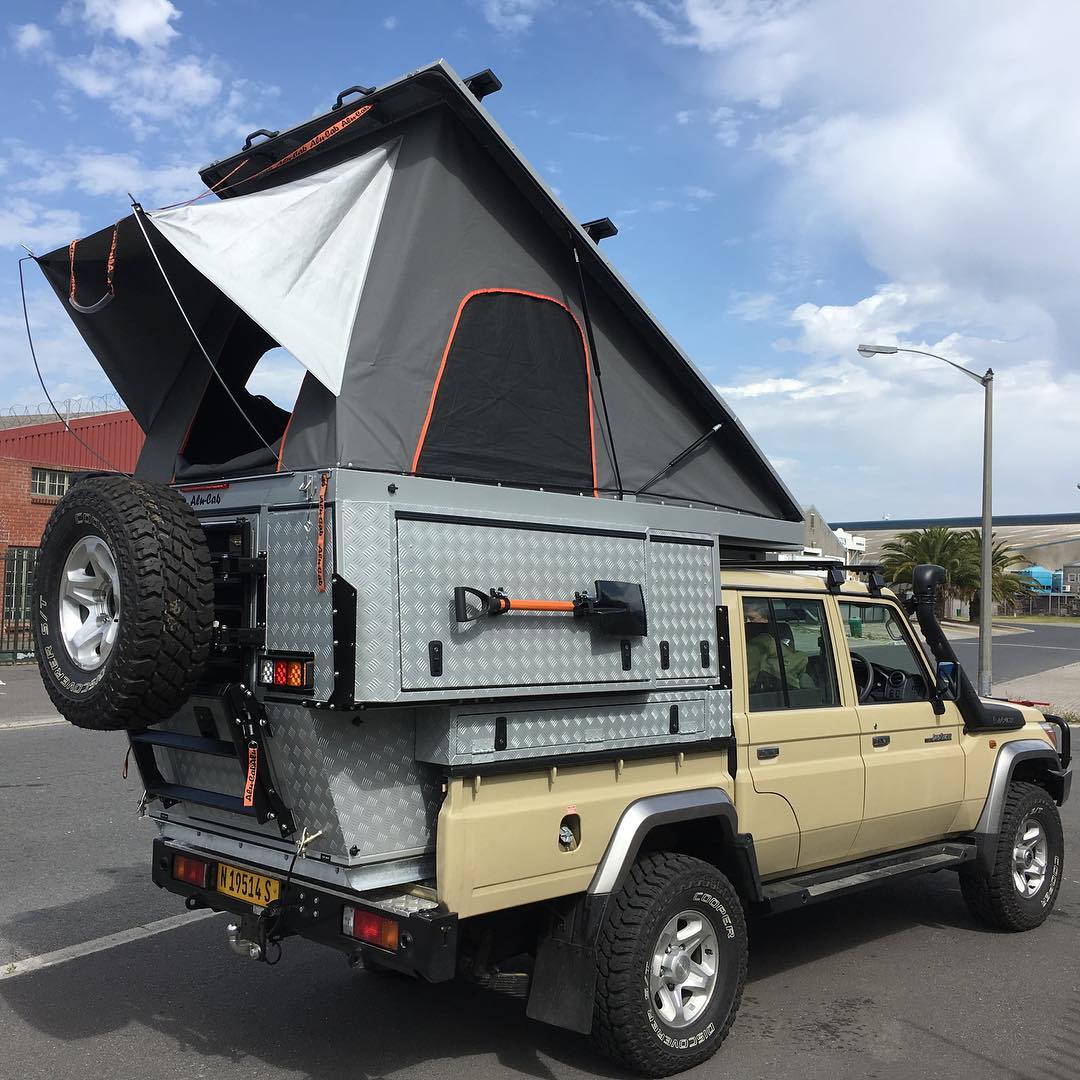
A hardshell is sealed when closed. Pull two latches, gas struts do the rest, bedding untouched, no dust. That alone is worth the price jump.
Let’s Talk About the Baboons
South African overlanding guides don’t mention this enough, and they should.
If you’ve camped at Skukuza, at Cape Point, or anywhere in the Drakensberg foothills, you already know. Baboons are extraordinarily capable problem-solvers with opposable thumbs, no fear of consequence, and a specific interest in anything that smells remotely like food. They have unzipped softshell rooftop tents. Entered them. Eaten what was inside and redecorated with the rest. A zipped canvas is not a deterrent to a 30kg animal that spends its days figuring out how to open things.
A locked hardshell doesn’t stop baboons from sitting on your vehicle roof and judging you — nothing stops that. But it does keep them out of your bedding. This is a specifically South African reason to spend the extra money, and it applies to anyone camping east of Johannesburg or south of Paarl.
Hardshell vs Softshell: The Honest Split
Softshells are not bad tents. Some of the best value in the SA market is softshell, and if your overlanding is still occasional — one or two trips a year, mostly in established camps — a well-made softshell does everything it needs to do and keeps a significant amount of money in your wallet.
The case for going softshell comes down to three things: lower entry price (R14,700 vs R35,000+), more floor space for the same length (folding softshells open wider), and lighter weight on the scale at the cheap end of the market.
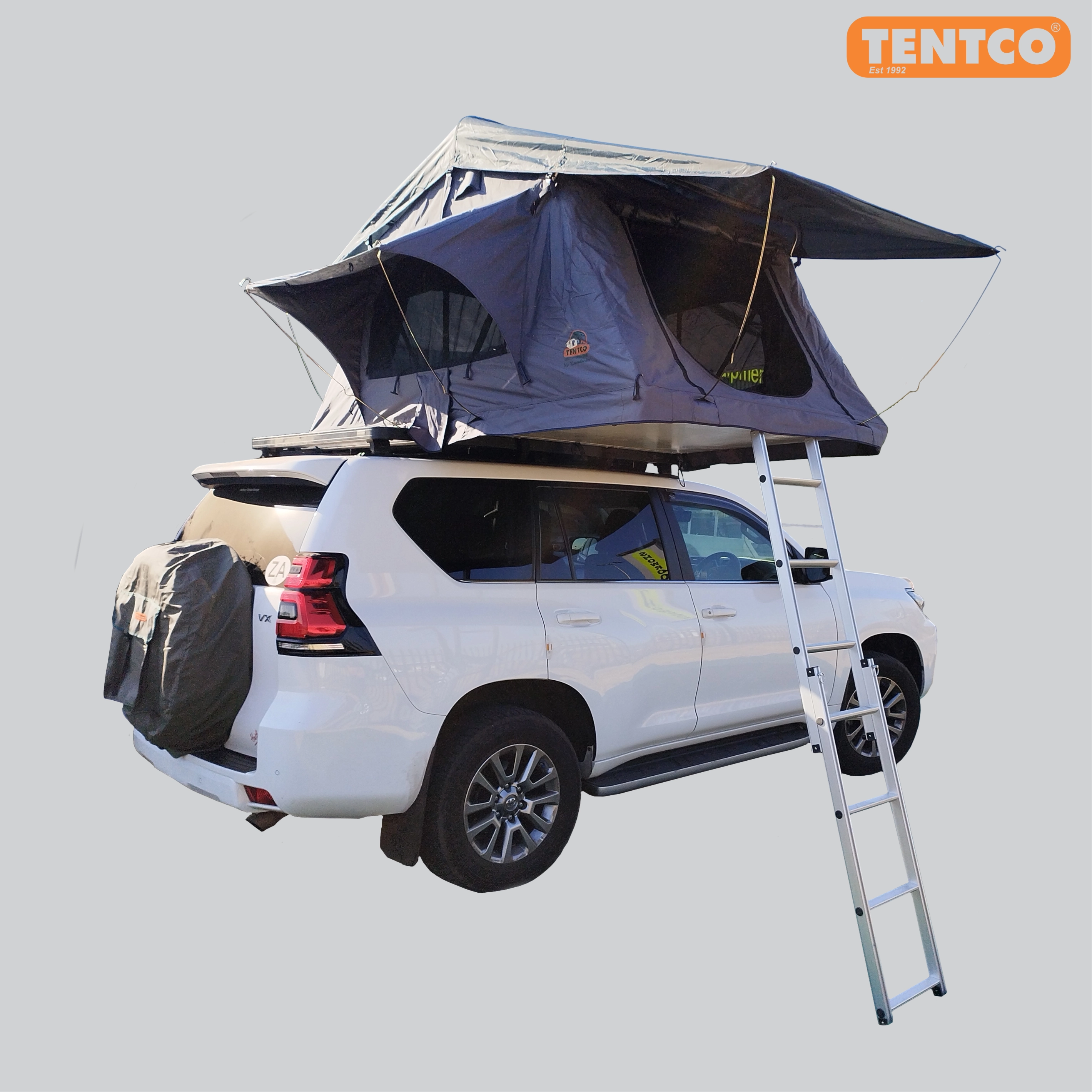
The case against, in SA specifically: dust infiltration, baboon vulnerability (see above), and the setup/pack-down tax on long trips. When you’re doing 10 nights in Namibia and breaking camp every second day, the three extra minutes per setup becomes something you feel.
The market has also shifted. Entry-level hardshells now start at R35,000 — that gap used to be much wider. If you’re buying your first tent and can stretch to R35–40k, buy the hardshell and don’t look back.
What Actually Matters in SA Conditions
Not all spec sheet numbers are equal. Here’s what separates good decisions from expensive regrets:
Dust sealing. Your non-negotiable in SA. The Kalahari, Namibia’s D706, the road from Nossob to Twee Rivieren — fine dust gets into everything, always. A hardshell with a good perimeter seal is the answer. Softshell covers help, but they’re not airtight.
Weight vs your rack rating. This is underappreciated. Your roof rack has a dynamic load rating — the weight it can carry while moving on corrugated roads, which is dramatically lower than static load. By the time you fit the rack itself, a 76kg tent, a solar panel, and a couple of jerry cans, you’re often beyond spec. The Alu-Cab LT-50 (46kg) and ARB Esperance (56kg) exist precisely because weight is an engineering concern, not just a selling point.
Mattress thickness. You will sleep on this for consecutive nights, sometimes in cold Lesotho air at altitude, sometimes on a hot Limpopo evening. The difference between a 50mm mattress and an 80mm one is not subtle. Tents at the budget end compromise here first.
Ladder design. At 2am in 4°C Drakensberg temperatures when nature calls, you will think about your ladder. Wide rungs, good grip, secure mount. Doesn’t sound important until it is.
Top Rooftop Tents for a Land Cruiser in South Africa (2026)
South Africa is genuinely well-served here. Most of the market is locally manufactured — Eezi-Awn, Alu-Cab, Tentco, Howling Moon, and Bundutec have been building RTTs on this continent for decades. No import duties, local warranty support, and designs that have been tested in exactly the conditions you’ll put them through.
| Tent | Type | Weight | Price (ZAR) | The honest take |
|---|---|---|---|---|
| Tentco 1.4m | Softshell | ~50kg | R16,660 | First tent. No regrets. Upgrade later if you get serious. |
| Front Runner Feather-Lite II | Softshell | 49kg | R16,499 | Best softshell if weight is your constraint |
| Howling Moon Comet Ultra | Hardshell | — | R35,283 | Cheapest credible hardshell in SA right now |
| Quick Pitch AERO | Hardshell | 60kg | R36,100 | SA-made clamshell, light and clever |
| Alu-Cab LT-50 | Hardshell | 46kg | R40,995 | The weight-obsessed overlander’s choice. Lightest hardshell in SA. |
| Eezi-Awn Blade | Hardshell | 75kg | R40,890 | 80mm mattress, 280gsm canvas. Built to outlast your Land Cruiser. |
| BunduTop Electric | Hardshell | 73kg | from R42,790 | 18-second push-button open. SA-made. Genuinely impressive. |
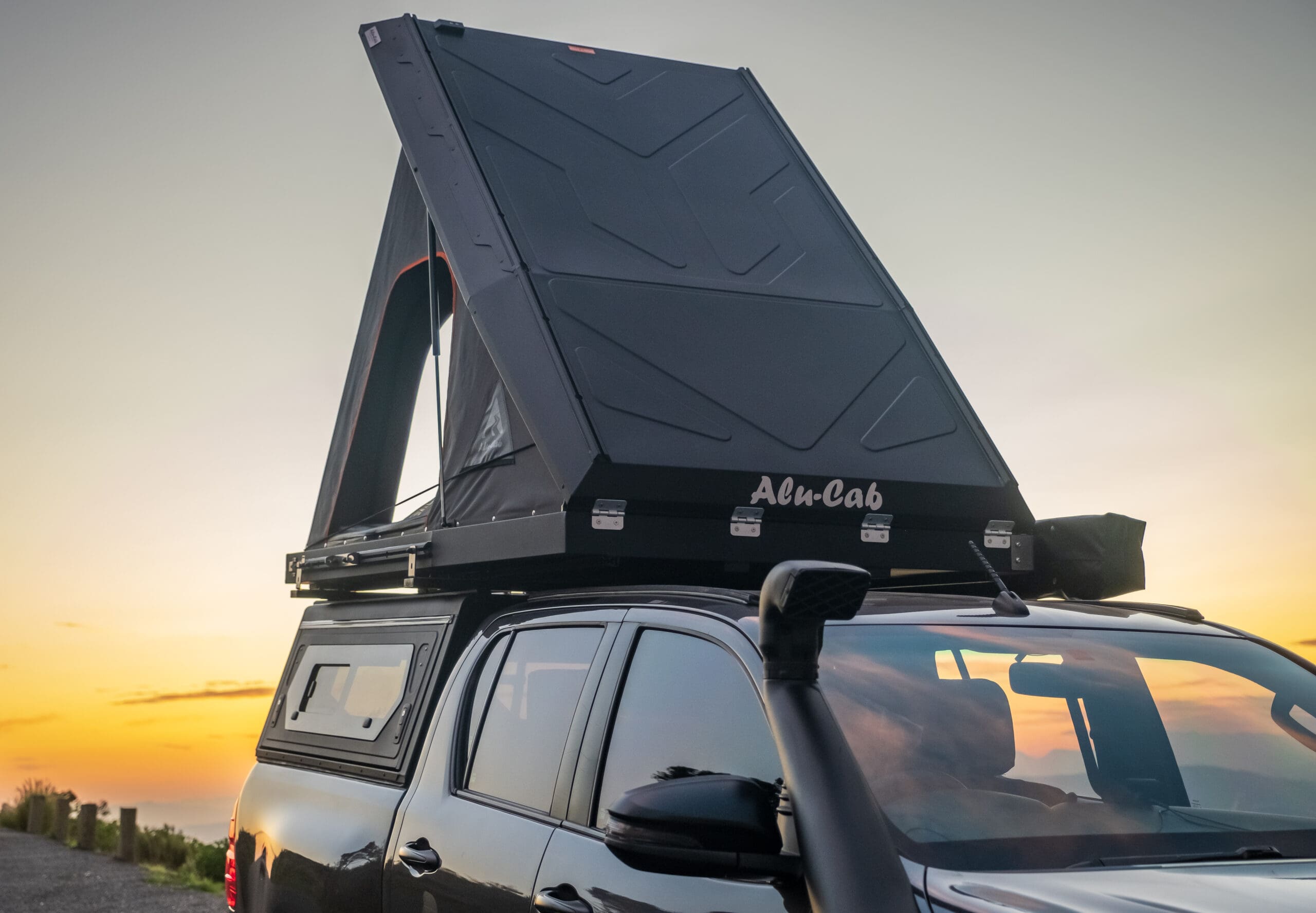
| Alu-Cab Gen 3-R | Hardshell | 76kg | R51,000–R59,995 | The benchmark. Built in Cape Town for African conditions. |
| ARB Esperance | Hardshell | 56kg | R64,995 | Light for its class. Stargazing roof panel. Premium finish. |
| iKamper Skycamp 3.0 | Hardshell | 74kg | R63,900+ | Maximum floor space. Korean engineering. Worth the import premium. |
Prices sourced from SA retailers, June 2026. Prices vary between branches and may include fitment.
A note on the Eezi-Awn vs Alu-Cab debate, which exists in every SA overlanding WhatsApp group: both are exceptional. Eezi-Awn (Johannesburg, est. 1987) builds for longevity — the Blade’s 280gsm canvas and SABS-approved mattress are the kind of specs that hold up over a decade. Alu-Cab (Cape Town, est. 2000) builds for precision — the Gen 3-R’s tolerances, integrated solar input, USB-C charging, and heater port reflect a more modern engineering philosophy. Neither is wrong. They represent different values.
Where to Buy in South Africa
4x4 Mega World is the largest specialist 4x4 retailer in the country with 25+ branches nationwide — Cape Town, Johannesburg, Pretoria, KZN, Polokwane, and beyond. They’re Africa’s sole ARB distributor and stock the full Alu-Cab range, which means you can spec a tent, sort your suspension with an OME kit, and have everything professionally fitted in a single visit. For Land Cruiser owners that combination is hard to beat.
Other reputable options: Safari Centre Cape Town for multi-brand selection (Eezi-Awn, iKamper, BunduTop), Tentco direct in Boksburg with online delivery, iKamper Africa for the Korean range, and Wild Access for online multi-brand shopping.
The Verdict
Here’s where we stop hedging.
If you are buying your first rooftop tent and money is the deciding factor: Tentco 1.4m softshell, R16,660. It’s honest, it’s South African, it’ll get you off the ground on your first proper trip, and you can upgrade in three years when you know exactly what you wish it did differently.
If you want a hardshell and don’t want to spend Gen 3-R money: Alu-Cab LT-50 at R40,995. Lightest hardshell in the country, Cape Town-made, and the right call for anyone who takes their roof load rating seriously.
If you’re buying the last rooftop tent you’ll ever need: Alu-Cab Gen 3-R, from R51,000. Built for the Kalahari. Dustproof when closed. 70mm mattress that you’ll actually sleep on. Heater port for Lesotho in July. Solar input for the off-grid builds. And it’ll outlast the Land Cruiser you’re putting it on.
Lekker kamp ry.